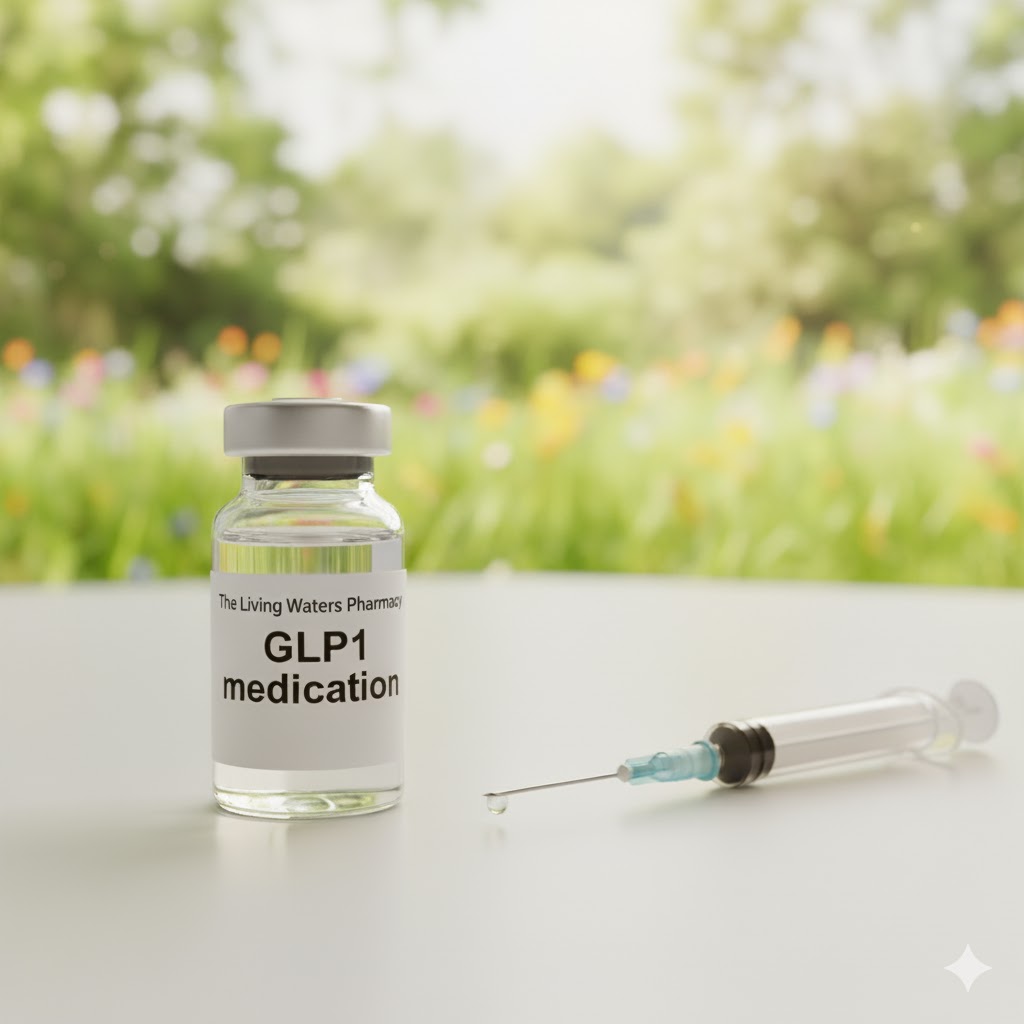
If you’ve been following GLP-1 news in 2025 and 2026, you’ve probably seen alarming headlines about the FDA cracking down on compounded semaglutide. Texas patients are right to ask: is compounded GLP-1 medication still legal? Can I still get it? The honest answer is more nuanced than the headlines suggest — and for patients working with a properly licensed Texas 503A compounding pharmacy, the pathway remains clear.
What Actually Changed in 2025
In early 2025, the FDA removed semaglutide from its official drug shortage list. This was significant because the broad shortage-based exemption that had allowed large-scale 503B outsourcing facilities to mass-produce compounded semaglutide for distribution came to an end.
Put plainly: the national telehealth brands that were sourcing compounded semaglutide from giant bulk-production warehouses and shipping it to patients nationwide faced a genuine legal disruption. Many were operating in a gray zone that the FDA’s shortage declaration had temporarily permitted.
What Did NOT Change
What remained fully legal — and remains legal today — is 503A patient-specific compounding by state-licensed pharmacies.
Under federal law, a licensed 503A compounding pharmacy can prepare a compounded medication for an individual patient based on a valid prescription from a licensed prescriber. This is fundamentally different from bulk production for mass distribution. It is how traditional compounding has always worked, and it was not affected by the FDA’s semaglutide shortage delisting.
The Texas State Board of Pharmacy continues to license and regulate 503A compounding facilities. As long as a pharmacy is properly licensed, operating under USP standards, compounding from pharmaceutical-grade ingredients, and dispensing based on individual patient prescriptions, the legal framework is solid.
The Difference Between 503A and 503B — Why It Matters for You
Most patients don’t know there are two distinct categories of compounding pharmacies, and the distinction matters enormously right now:
503B Outsourcing Facilities
503B facilities are large-scale manufacturers that produce compounded drugs in bulk, without patient-specific prescriptions, for distribution to healthcare providers and facilities. These are the operations that were most disrupted by the FDA’s 2025 actions. Many of the national telehealth brands that advertised aggressively low prices were routing prescriptions through these facilities.
503A Compounding Pharmacies
503A pharmacies compound medications for specific individual patients based on a valid prescription. They operate under state pharmacy board oversight, follow USP compounding standards, and are not subject to the same FDA manufacturing regulations that apply to 503B facilities. This is the category that Living Waters Pharmacy operates under — and it’s the category that remained on solid legal ground throughout 2025 and into 2026.
What the FDA Did Target — And What It Means
In September 2025 and again in March 2026, the FDA issued warning letters to telehealth companies for misleading marketing of compounded GLP-1 products. Specifically flagged:
- Claims that compounded semaglutide is “the same as” or “equivalent to” Ozempic or Wegovy (it’s not FDA-approved)
- Providers that guarantee prescriptions before medical evaluation
- Companies that don’t disclose the name of the compounding pharmacy
- Fake or incentivized reviews (the FTC targeted several providers for this)
Notice what isn’t on that list: properly licensed 503A pharmacies compounding patient-specific prescriptions. The FDA’s enforcement actions targeted marketing fraud and bulk production violations — not legitimate, licensed compounding.
How to Verify a Texas Compounding Pharmacy Is Legitimate
Before starting any GLP-1 program in Texas, you can verify a pharmacy’s legal standing in under two minutes:
- Ask for the pharmacy’s Texas State Board of Pharmacy license number
- Look it up at pharmacy.texas.gov — the public license lookup tool
- Confirm it’s a 503A facility, not an unlicensed operation
- Ask for the Certificate of Analysis for your specific batch — a licensed facility provides this automatically
Living Waters Pharmacy’s Texas license is publicly searchable. We compound semaglutide and tirzepatide in our own facility at 11222 Richmond Ave., Suite 260, Houston, TX — under direct pharmacist supervision, with third-party batch testing and a COA shipped with every order.
The Bottom Line for Houston Patients in 2026
Compounded GLP-1 therapy is legal in Texas in 2026. The legal pathway — 503A patient-specific compounding by a licensed pharmacy — was not closed by the FDA’s 2025 actions. What closed was the shortcut: bulk production by 503B facilities hiding behind the shortage exemption.
For patients working with a properly licensed, verifiable 503A pharmacy like Living Waters, nothing has changed in terms of legal access. What has changed is that the bar for verifying your provider is higher — and that’s a good thing for patient safety.
If you have questions about the legal and regulatory framework around your treatment, our pharmacist is happy to talk it through directly. Or visit our FAQ for answers to common questions about how our compounding process works and what’s included in every order.
This article is for informational purposes only and does not constitute legal or medical advice. Regulations around compounded medications are subject to change. Consult a licensed healthcare provider and pharmacist before starting any treatment.